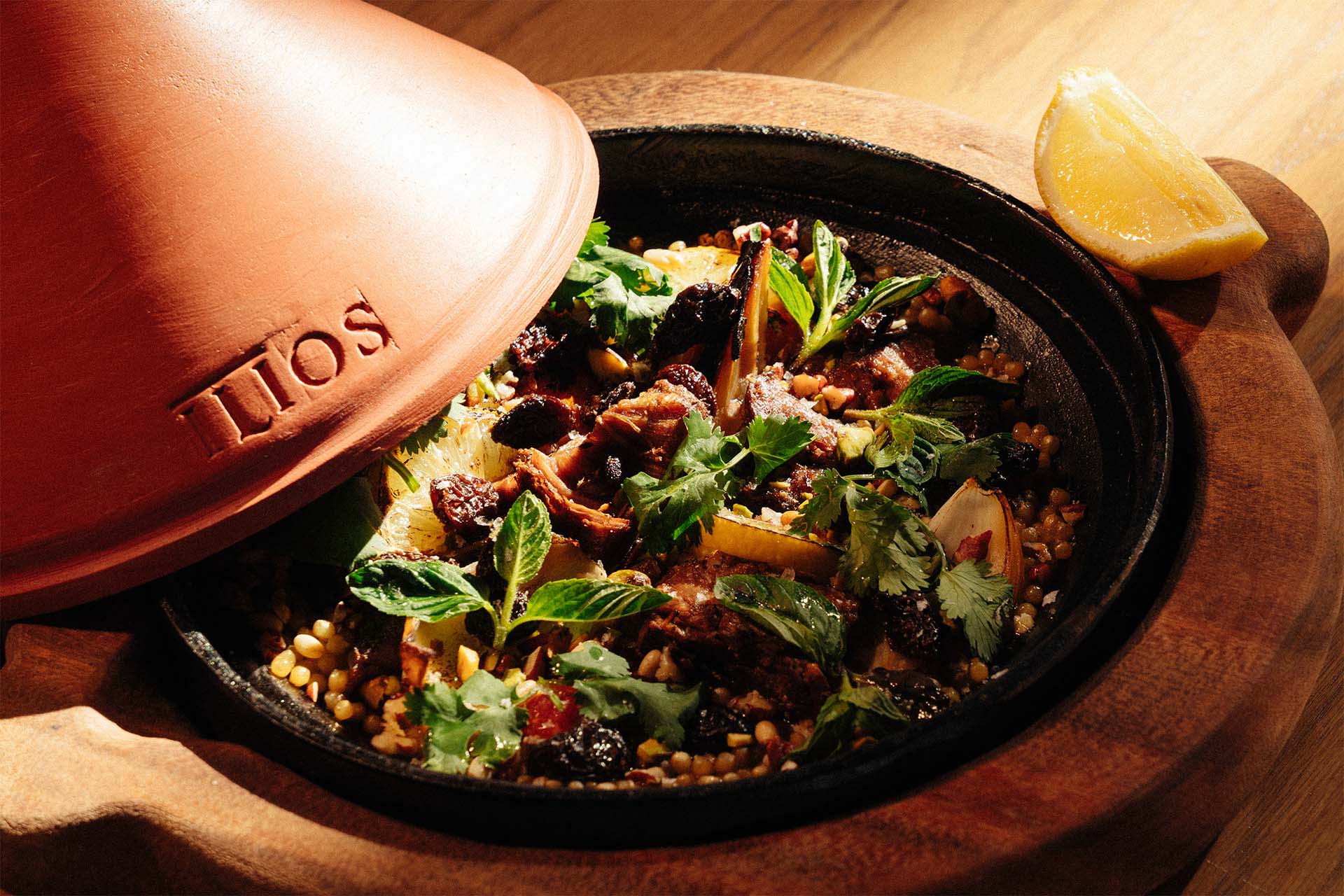

When we think of Greece, it is easy to picture whitewashed island houses, the blue waters of the Aegean, and summer nights in Mykonos.
But to truly understand the country, there is another place worth looking at: the table.
Greek food culture is not defined only by its ingredients or recipes. It is also about how people eat, how long they stay around the table, who they share it with, and why hospitality plays such an important role.
In Greece, food has long been a way of bringing people together.
And these seven traditions help explain why.
1. The Table Is Made for Sharing
If you have ever wondered how people eat in Greece, one of the simplest answers is: together.
Greek dining traditions place great importance on dishes served at the center of the table for everyone to enjoy. Rather than always following an individual sequence of courses, a meal can unfold through different flavors shared among everyone.
This approach turns the table into a social space.
At Ilios, that philosophy can be found in dishes designed for sharing, from fish and meats to options such as the Mezze Platter Ilios, offering a contemporary interpretation of a deeply Mediterranean tradition.
2. Meze Is More Than an Appetizer
To talk about Greek gastronomy is to talk about meze.
Although it can be described as a selection of small dishes, its meaning goes beyond portion size. Meze is connected to a slower, more social way of eating, with different preparations arriving at the table while conversation continues.
Tzatziki, olives, hummus, and other Mediterranean flavors can all become part of the experience.
The goal is not necessarily to reach the main course as quickly as possible.
It is to enjoy everything that happens before it.
3. Olive Oil Is Part of Greece’s Culinary Identity
Few ingredients are as closely associated with Mediterranean food as olive oil.
In Greek cuisine, it is used for cooking, dressing vegetables, finishing dishes, and complementing simple ingredients. Its importance is deeply connected to the agriculture, landscape, and culinary history of the Mediterranean.
That is why olive oil is more than simply a cooking fat in Greek cuisine.
It is one of the ingredients that helps define its identity.
At Ilios, Greek olive oil also appears throughout different preparations, maintaining that connection to the Mediterranean roots behind the concept.
4. What Happens After the Meal Matters Too
A meal does not necessarily end when the last plate disappears.
Conversation may continue over coffee, another drink, or simply more time spent around the table.
While there is no exact English equivalent for the Spanish concept of sobremesa, the idea feels familiar throughout Mediterranean cultures: finishing your food does not mean you immediately have to leave.
This more relaxed relationship with time helps explain why dinner can stretch on for hours.
It is not simply about eating slowly.
It is about enjoying the company.
5. Hospitality Has Ancient Roots
Hospitality holds an important place among Greek traditions.
In ancient Greece, the concept of xenia described a relationship of hospitality between host and guest. Welcoming someone involved offering food, protection, and respect.
Although society has changed enormously since then, welcoming and caring for guests remains strongly associated with Greek culture.
The table is one of the most natural expressions of that hospitality.
Serving food is not only about feeding someone.
It is also a way of welcoming them.
6. Food and Celebration Are Closely Connected
In Greece, food and celebration naturally belong together.
Family gatherings, festivals, and special occasions often revolve around a shared table. Music, conversation, and food can all become part of the same moment rather than existing as separate experiences.
This is also where one of the most internationally recognizable Greek expressions comes in:
OPA!
Depending on the context, it can express excitement, surprise, or celebration. Rather than searching for one perfect literal translation, it is better understood as an exclamation connected to the energy of the moment.
At Ilios, OPA! becomes exactly that: a collective moment when the tables go from watching the celebration to becoming part of it.
7. In Greece, Food Also Builds Community
Perhaps this is the idea that connects everything else.
Greek cuisine does not exist only in the ingredients that reach the plate.
It also exists in the act of sitting down together.
Sharing dishes, spending time around the table, welcoming guests, and making food part of a celebration are traditions that strengthen connections between people.
That is why understanding how people eat in Greece means looking beyond recipes such as tzatziki, moussaka, or baklava.
Food can also tell a story about belonging.
A Tradition That Continues to Evolve
Greek food culture has centuries of history, but that does not mean it remains unchanged.
Contemporary restaurants reinterpret ingredients, techniques, and traditions while preserving essential elements of the Mediterranean approach to dining.
That philosophy is also part of Ilios.
Our concept draws inspiration from Greece not only through its cuisine, but also through hospitality, dishes designed for sharing, music, and celebration around the table.
It is a contemporary interpretation of an idea that has long been part of Mediterranean culture:
Food tastes different when it is shared.
Discover the Spirit of Greece at Ilios
Experience our interpretation of Greek gastronomy at Ilios in Cancun, Tulum, Playa del Carmen, and Los Cabos, where Mediterranean cuisine, hospitality, and celebration come together around the same table.
Reserve your table and discover our way of interpreting the spirit of Greece.
And to explore our dishes, cocktails, events, performances, and experiences, follow us on social media.
Because Greece may begin with the food.
But it always comes back to the people.
OPA!